
As human robots enter the factory from science fiction, the power apparatus is becoming the invisible character of the revolution.
In 2026, the human robotics industry was moving from laboratory to mass production at a faster than expected. Tesla Optimus, Woo Tree Technology, the Brain Robot. .. the head player in the country and abroad announced a scale delivery plan. And behind this competition, a key bottleneck is being re-examined: every joint of robots is essentially a precision electric machine; power-driven efficiency and power density directly determine robot survival, response speed and body size limits.
The traditional Silicon MOSFET program has become progressively exhausted on this track – switch frequency is limited, size is difficult to compress, heat is high. The arrival of a new generation of power devices is inevitable.
Why can't human robots go away?
GaN sets drive power-driven switches at a frequency above 100 kHz, far beyond the traditional MOSFET program, with a wide-banded feature. The direct benefits of high switch frequency are a significant reduction in the size of the passive device, the loss of large volume electrolytic capacitors, and the simultaneous decline in the volume and weight of the drive module — which is of extraordinary significance for human robots that need to be carefully calibrated per gram of weight.
The measured data show that using the GaN device drive, the dead zone time was as low as 10ns, an increase of 12 per cent in the efficiency of the conventional MOSFET program and a power density of 511 W/kg. International giants such as TTI and British Flying Bulls have successively launched the GaN integration solution for robotic scenarios, with the national production alternative window of the domestic industrial chain being opened simultaneously.
SGT MOS: Another jigsaw puzzle
Human robots do not all require the maximum performance of the GaN – in medium-low-pressure joints, server-driven and industrial automated frequency applications, medium-low-pressure SPT (shielding gutter) MOSFET has become the best option for performance with its super-low Rds (on) and excellent switches.
The STT process compresses the leaking caps (Cgd) to very low levels through a shield structure and achieves faster switch speeds while reducing driving wear and tear; and very low conductive electrical resistance minimizes copper losses in large currents, effectively inhibits the temperature rise of the joint module and prolongs the useful life of key parts of robots.
GAN+SGT MOS Double-line layout, covering the robot-driven landscape
As a state-level state-specific, new " little giant " power semiconductor enterprise, MOT has achieved a synergetic layout on two product lines: nitrogenized aluminum devices and low and medium pressure GST MOSFET:
• MOT GaN series: high frequency, high efficiency, small seal, special design for robotic joints and industrial service applications for high frequency applications, switch performance against international mainstream products, support for work frequencies above 100 kHz;
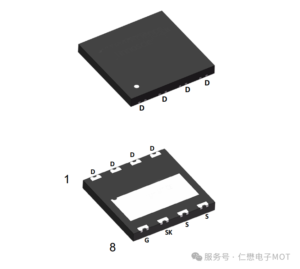
• Ingill medium-pressure GST MOS series: covering 20V–150V voltage zone, ultra-low Rds(on) designed to maintain excellent heat performance in the context of the continuous output of large currents, multi-mass co-driving of adapted robots and applications of industrial variants;
• Double-wire synergetic, system-level coverage: GaN is responsible for the high frequency main drive, and SGT MOS bears the medium power retention and auxiliary drive, which combine to build a complete robotic power system programme to help engineers with the one-stop completion package.
MOT has developed, built, supply chains are perfectly manageable, with an annual output exceeding 10 billion, providing a steady and reliable device guarantee for robots in the process.
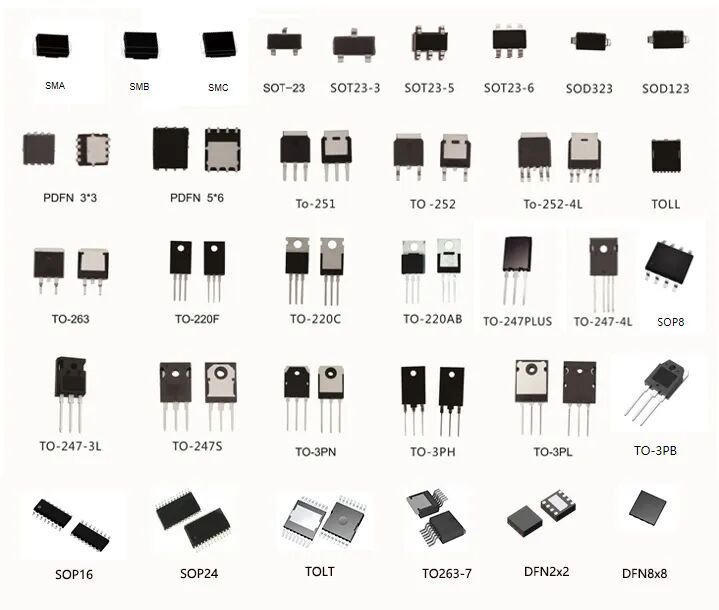
Recommended type: MOT1145G, MOT1165G, MOT112HG, MOT1178G, MOT8156G, MOT3145J, MOT3150J, MOT3141AJ, MOT1113T, MOT112T; MOTGD65R Series, MOTGD12R Series, MOTGE65R Series
The power revolution of human robots is being redefined from the chip level. A high-performance power unit, such as product specifications, application options or sample support, is selected, and the contact team for the Engineering of Electronic Applications is welcomed.