When Chips Enter the High-Power Era, Heat Becomes a New Challenge
For decades, the semiconductor industry has pursued smaller dimensions, higher performance, and lower power consumption.

However, rapid growth in electric vehicles, artificial intelligence, 5G communications, photovoltaic energy storage, and smart manufacturing is pushing chips toward higher power levels and greater integration. For power semiconductors, stable operation and rapid heat removal have become decisive factors in product performance and reliability.
A power chip continually generates heat during high-speed switching. If that heat cannot be removed promptly, device temperature rises, efficiency falls, service life may be shortened, and the system may eventually fail.
In the era of advanced packaging, thermal performance has therefore become an important measure of semiconductor competitiveness.
From Chip to System, the Package Defines the Heat-Removal Path
Semiconductor packaging protects the chip and provides electrical connections, but it also forms the critical bridge between the die and the external thermal environment.
For power devices such as MOSFETs, IGBTs, and Schottky diodes, package structure, material selection, and manufacturing processes all directly affect thermal resistance.

An effective package design should provide:
- A lower-resistance thermal path that transfers heat quickly.
- High reliability during prolonged operation at elevated temperature.
- Strong mechanical stability under thermal cycling.
- Improved electrical performance with lower conduction and switching losses.
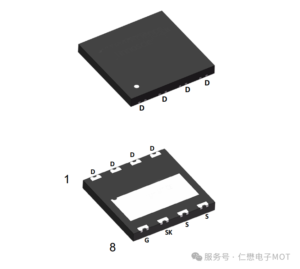
As power density increases, conventional packages are being upgraded for greater efficiency and reliability. SOT, TO, and PDFN package families continue to evolve to meet the requirements of different applications.
MOT Advances Power Semiconductors Through Packaging Technology
Founded in 2011, Guangdong Renmao Electronics Co., Ltd. (MOT) has long focused on semiconductor assembly and testing. The company integrates the research, design, production, and sale of power devices.
MOT now operates manufacturing bases in Shenzhen in the Pearl River Delta and Yancheng, Jiangsu, in the Yangtze River Delta. Its facilities cover 40,000 square meters, including 20,000 square meters of assembly and test workshops for SOT, TO, PDFN, and other package formats.
In power semiconductors, packaging determines far more than a product’s external form. It also influences thermal efficiency, reliability, and consistency during operation.
MOT continually improves its packaging and manufacturing processes. Advanced equipment, rigorous quality management, and process upgrades help strengthen product stability and provide customers with dependable power-device solutions.
A Broad Product Portfolio for Different Thermal Requirements
MOT focuses on the research and manufacturing of MOSFET power devices. Its main products include Schottky diodes, transistors, low-, medium-, and high-voltage MOSFETs, fast-recovery diodes, low-forward-voltage Schottky devices, and IGBTs. These products serve consumer electronics, automotive electronics, industrial electronics, electric vehicles and charging infrastructure, intelligent equipment, rail transit, photovoltaic energy, 5G, and other markets.
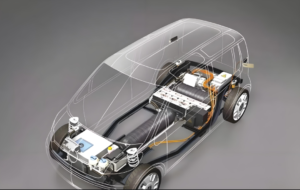
Electric-vehicle power devices must withstand high current and high temperatures, placing demanding requirements on heat dissipation and reliability.
Photovoltaic inverters and energy-storage systems require stable long-term operation, low loss, and high efficiency.
In consumer electronics, miniaturization requires better thermal management within a limited space.
Advanced packaging technology supports each of these application scenarios.
From Manufacturing to Smart Manufacturing
Competition in semiconductors is expanding beyond chip performance to include materials, packaging, testing, and system-level application expertise.
For power semiconductors, heat is not an issue to address only after packaging. It must be considered throughout chip design, package engineering, manufacturing, and application validation.
MOT remains committed to technical innovation and quality improvement. Its specialized research team and continually optimized manufacturing capabilities strengthen the competitiveness of its power-device products.
As electric vehicles, artificial intelligence, and renewable-energy industries continue to grow, power semiconductors will take on an increasingly important role.
MOT will continue to develop its semiconductor assembly and testing capabilities, delivering reliable products, advanced processes, and responsive service to electronic manufacturers worldwide.