Featured article
How to Attach a Heatsink to a MOSFET
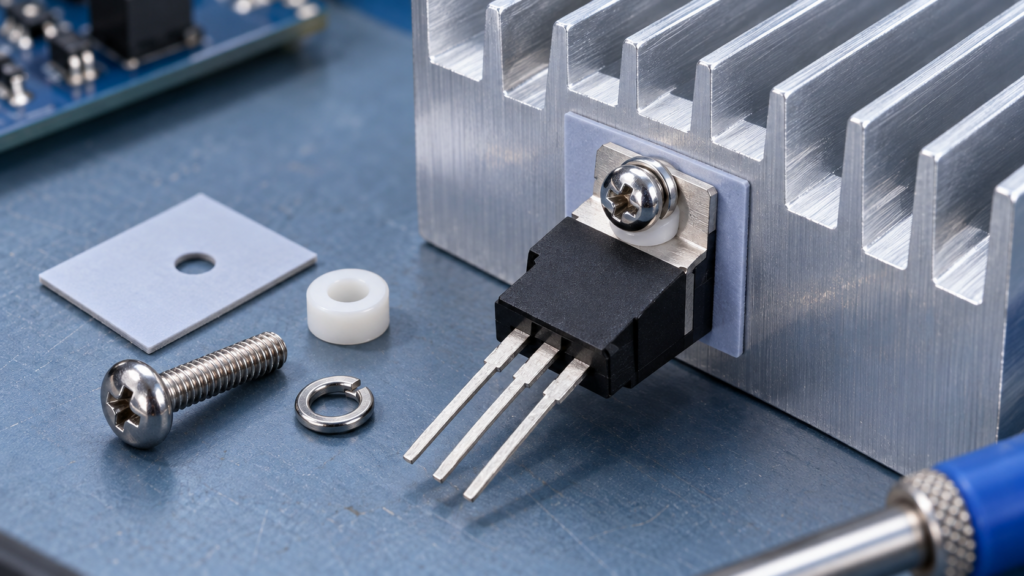
Attach a heatsink to a MOSFET with a flat clean interface, the correct thermal material and electrical insulation, controlled clamping force, and verified junction temperature.
Browse: Power Diode Power Mosfet Power Transistors
Technical knowledge hub
Thermal, avalanche, qualification and lifetime engineering practices.
Attach a heatsink to a MOSFET with a flat clean interface, the correct thermal material and electrical insulation, controlled clamping force, and verified junction temperature.
Attach a heatsink to a MOSFET with a flat clean interface, the correct thermal material and electrical insulation, controlled clamping force, and verified junction temperature.
Protect a MOSFET from dV/dt by controlling switch-node slew rate, minimizing parasitic coupling, strengthening turn-off, clamping the gate, and verifying waveforms under worst-case conditions.
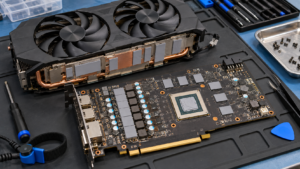
RX 580 graphics-card VRM MOSFETs need an effective thermal path, normally through thermal pads into the card's heatsink or a dedicated VRM plate with airflow.
A heatsink cools a MOSFET by conducting heat from the junction through the package and interface, spreading it through metal, and transferring it to moving…
Do not operate a power MOSFET close to its gate-oxide breakdown or absolute maximum gate voltage; use recommended drive levels, transient margin, clamps, and low-inductance…
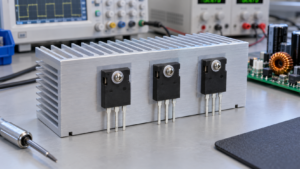
Multiple MOSFETs can share one heatsink when electrical isolation, total power loss, thermal interaction, mounting pressure, creepage, and the hottest junction temperature are all verified.
SiC MOSFETs are not immune to radiation. Heavy ions, protons, neutrons, and total ionizing dose can cause leakage shifts, gate degradation, or destructive single-event burnout,…
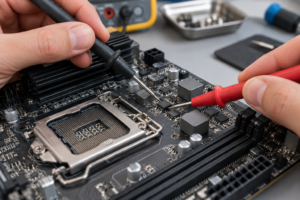
Check a motherboard MOSFET safely with the board unpowered, a verified pinout, and diode-mode measurements across drain, source, and gate. Learn how to interpret in-circuit…